
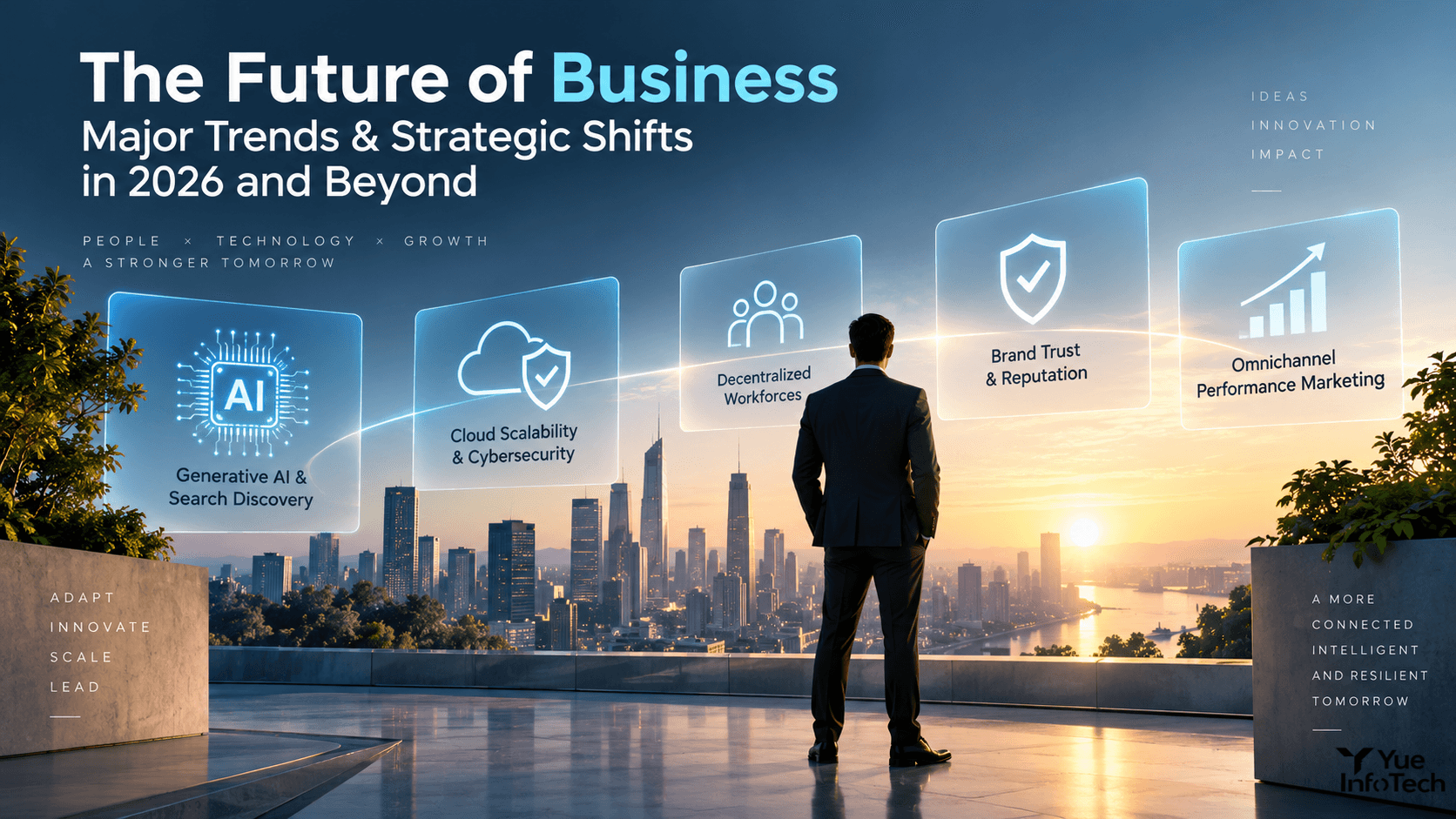
1. Generative AI & the Transformation of Search Discovery
Artificial intelligence has shifted from experimental automation to core operational infrastructure. In marketing and search, the emergence of generative answer engines has transformed customer discovery. Traditional keyword targeting alone is no longer sufficient; enterprises must optimize for machine comprehension.
To remain competitive, organizations are prioritizing structured SEO services that integrate Answer Engine Optimization (AEO) and Generative Engine Optimization (GEO). Structuring fact-dense, entity-first content allows companies to be cited directly in Google AI Overviews, Perplexity, and Gemini. Coupled with high-authority content writing services, brands are replacing low-value content with authoritative, human-led thought leadership that fulfills strict E-E-A-T guidelines.
2. Infrastructure Resilience: Cloud Scalability & Cybersecurity
As digital operations expand, business continuity depends entirely on infrastructure stability and perimeter security. The cost of downtime and data breaches has made managed IT an essential executive priority rather than an operational afterthought.
Modern enterprises are moving away from legacy hosting toward scalable cloud hosting environments that guarantee uptime and dynamic resource allocation. In parallel, heightened threat landscapes necessitate proactive cybersecurity protocols, including real-time threat detection, regular vulnerability assessments, and strict compliance audits. Consolidating these operational pillars under comprehensive IT services ensures technical debt does not impede commercial agility.
3. Decentralized Workforces & Modern Communication Systems
The hybrid work model has matured into a permanent operational standard. However, maintaining team collaboration, client responsiveness, and operational governance across distributed locations requires purpose-built communication architecture.
Forward-looking companies are phasing out traditional PBX landlines in favor of secure, unified VoIP solutions. Cloud voice systems integrate voice calling, messaging, and remote collaboration directly into business workflows, reducing communications overhead while delivering enterprise-grade call reliability for distributed teams.
4. Brand Trust, Governance, and Online Reputation Management (ORM)
In an era of deepfakes, synthetic reviews, and rapid social dissemination, brand reputation is vulnerable to unprecedented volatility. Customer trust is directly correlated with transparency, data privacy compliance, and public perception.
Maintaining authority requires a deliberate brand strategy that aligns corporate messaging with genuine customer experience. Simultaneously, enterprises are deploying active online reputation management (ORM) to monitor brand sentiment across multi-platform networks, neutralize negative review cascades, and protect executive credibility across search engines.
5. Unified Omnichannel Performance Marketing
The fragmentation of consumer attention across social platforms, video networks, and search engines has made single-channel advertising cost-ineffective. Modern customer acquisition demands a connected growth engine where paid media and organic touchpoints reinforce one another.
High-growth businesses rely on end-to-end digital marketing services that integrate:
- High-Intent Search Acquisition: Capturing active commercial demand through PPC management and targeted Google search ads.
- Targeted Paid Social: Nurturing audience interest and retargeting high-value prospects with data-backed Meta ads.
- Community & Engagement: Sustaining long-term brand recall through proactive social media marketing.
6. High-Performance Web Architecture as the Conversion Engine
A company’s website is the central clearinghouse for all brand equity, traffic, and revenue. Even the most sophisticated marketing campaigns fail if destination pages are slow, difficult to navigate, or poorly architected.
Investing in modern web design and development services ensures that digital properties satisfy Core Web Vitals, feature frictionless mobile UX, and convert visitors into qualified leads. For regional and multi-location businesses, pairing technical web architecture with localized local business services optimizes Google Maps visibility and hyperlocal search intent.
Strategic Comparison: 2026 Business Drivers vs. Execution Requirements
| Trend / Priority | Business Impact | Primary Operational Lever | Recommended Internal System |
|---|---|---|---|
| AI Search & Discovery | AI Overviews capture standard SERP clicks | AEO answer capsules, entity mapping, and schema markup | SEO & Content Services |
| Digital Resilience | Downtime & cyber threats directly erode revenue | Automated backups, firewalls, and managed cloud clusters | Cloud Hosting & Security |
| Distributed Operations | Remote teams face fragmented communications | Unified cloud telephony and collaborative PBX systems | VoIP Solutions |
| Rising Acquisition Costs | Single-channel paid campaigns yield diminishing ROAS | Multi-touch paid ads, search marketing, and brand tracking | Digital Marketing & PPC |
| Conversion Optimization | Traffic bounces on legacy, slow templates | Sub-second page loads, mobile CRO, and local discovery | Web Design & Local Solutions |